The $1.2 Billion Leak: Why Passive Waiting is Killing Owner-Operators
The trucking industry has normalized "free" labor. Here is the actual math on why you can't afford to be nice.
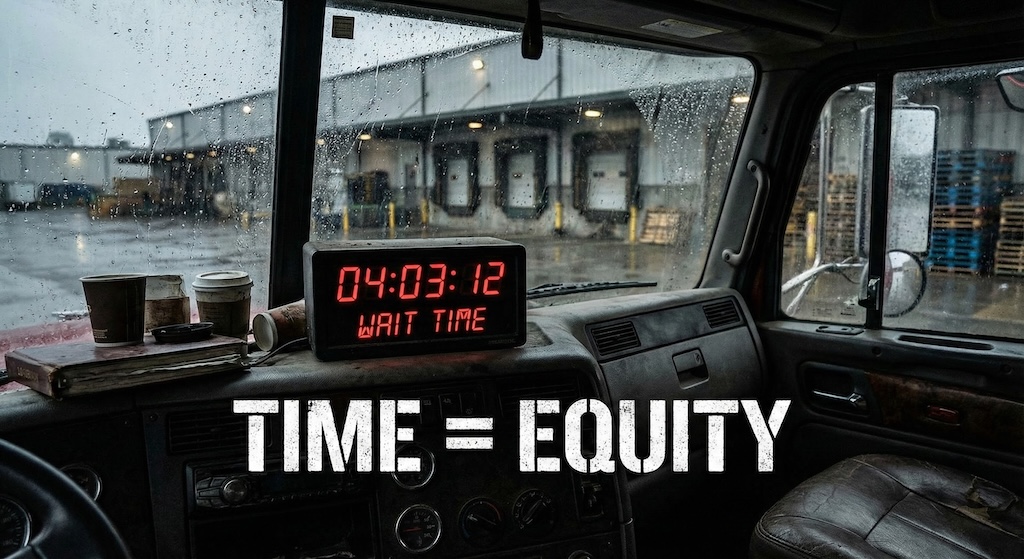
In no other industry would a professional show up with $150,000 worth of equipment and be told to "wait around for a few hours" for free. Yet, for independent Owner-Operators, this is Tuesday. According to the Department of Transportation, detention time costs the trucking industry an estimated $1.2 billion annually in lost productivity. For the individual Owner-Operator, unbilled detention is often the difference between a profitable year and bankruptcy.
The problem isn't just the waiting; it's the passive nature of the waiting. Most drivers sit at a dock, hoping the broker acts in good faith. They scribble times on a Bill of Lading (BOL) that might get "lost" or disputed later. Hope is not a billing strategy.
The Real Math: Fixed vs. Variable Costs
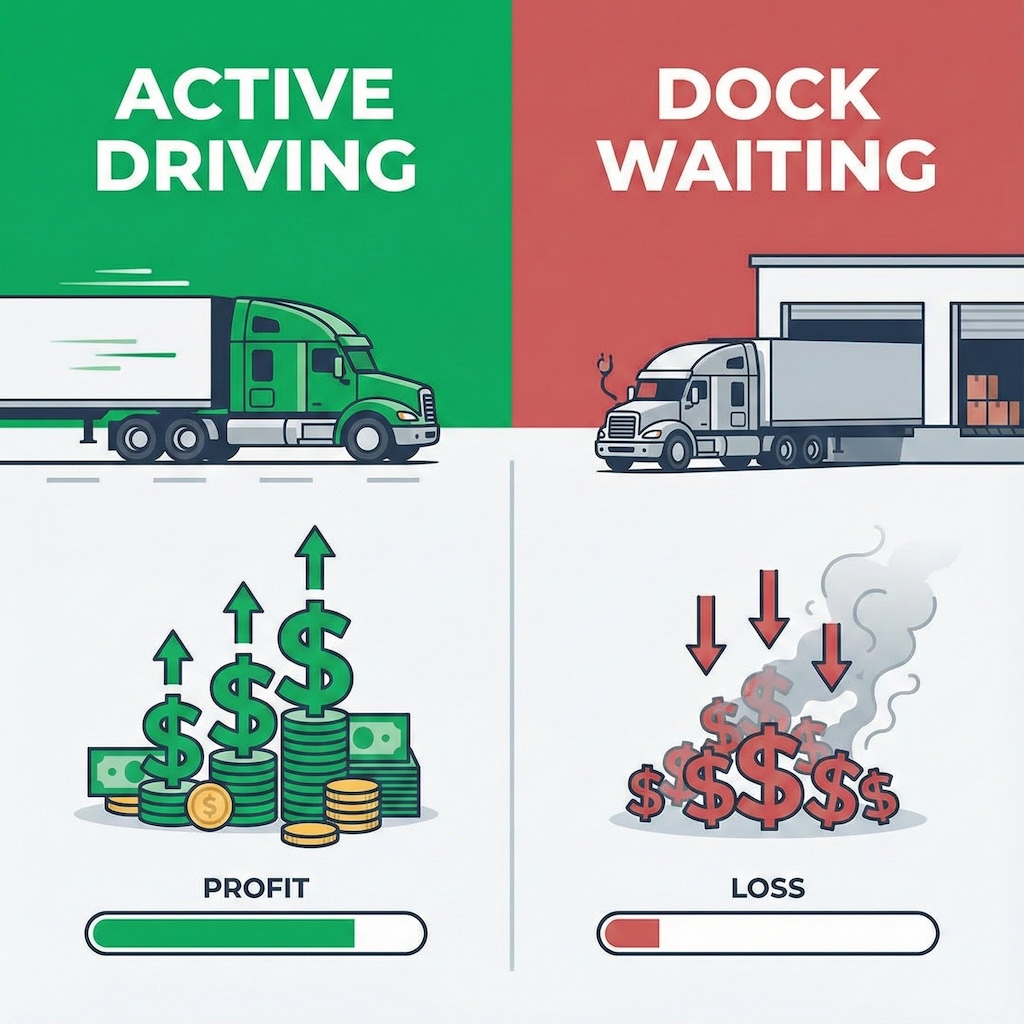
Many drivers calculate their "loss" based on missed miles. "If I was driving, I'd make $2.50/mile." While true, this ignores the Fixed Costs that continue to burn while you are parked. Your truck is a factory. When the factory stops, the overhead doesn't.
The "Burn Rate" of a Parked Truck
Even with the engine off, you are paying:
- Truck Payment: ~$2,500/mo ($83/day)
- Commercial Insurance: ~$1,200/mo ($40/day)
- Permits, IFTA, ELD Subs: ~$300/mo ($10/day)
- Driver Salary (You): Your time is worth at least $25/hr.
Total Static Cost: ~$65 - $85 per hour.
If you agree to a broker's "standard" detention rate of $25/hr, you are losing money every hour you sit. You are effectively subsidizing their inefficiency out of your own pocket. To break even, you need to be charging $50-$75/hour minimum.
The "2-Hour Free" Myth
Industry standard dictates two hours of "free time" for loading or unloading. Brokers treat this as a given. But who defined this standard? It’s a legacy holdover from an era before ELDs (Electronic Logging Devices) and precision GPS.
The 2-hour window assumes efficiency. If a shipper requires an appointment time, they are making a contract that they are ready for you. If they aren't, the contract is breached. While we often have to accept the 2-hour window to get the load, we must ruthlessly bill for minute 121.
The Opportunity Cost: The Backhaul Killer
Detention isn't just lost wages; it's lost schedule. A driver stuck at a receiver in Chicago for 5 hours misses the window to pick up a backhaul to St. Louis. That one detention event can kill an entire week's profitability by forcing a layover or a deadhead.
When you bill for detention, you aren't just charging for time; you are charging for the disruption to your entire logistics chain.
Weaponizing Your Time
The only way to combat this is to turn the "wait" into a transaction. This is why DetentionGun exists. We don't just "track" time; we invoice it.
By automating the clock the second you cross the geofence, you shift the dynamic from "Can I please get paid?" to "Here is the invoice for equipment utilization." It forces the broker to acknowledge that your truck is real estate, and they are paying rent.